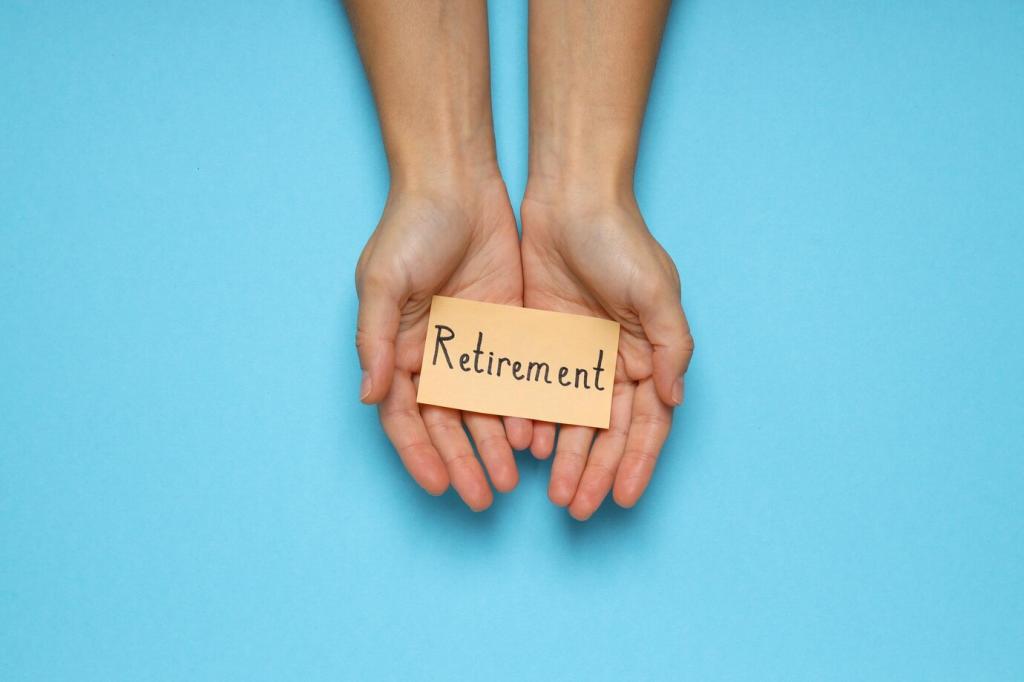

Step-by-Step Guide to Retirement Planning in Canada

Chosen theme: Step-by-Step Guide to Retirement Planning in Canada. A friendly, practical roadmap to help you build a confident, tax-smart retirement using Canadian programs, accounts, and real-life strategies. Join our community—subscribe and share your questions so we can tailor future steps to your goals.

Start With Your ‘Why’ and Your Numbers

Picture your ideal week at 65: travel, hobbies, family time, volunteering, part-time work, or studies. The clearer your vision, the easier it becomes to estimate costs, prioritize goals, and keep motivation high when markets wobble or life gets busy.

Start With Your ‘Why’ and Your Numbers

Choose a target retirement year and map three milestones: debt-free date, savings target, and trial run. Try a one-month ‘practice retirement’ where you live on your projected budget to reveal gaps, surprises, and opportunities for smarter choices now.

The Canada Pension Plan can start as early as 60 or as late as 70. Starting before 65 reduces payments for life, while delaying after 65 increases them monthly. Consider your health, work plans, and other income sources—deferring can be powerful longevity insurance when you expect a long retirement.
Old Age Security typically starts at 65, with an option to defer for higher payments. Be aware of the OAS ‘recovery tax’ that claws back benefits once your income exceeds a threshold indexed annually. Managing taxable income can help minimize clawbacks and stretch benefits.
The Guaranteed Income Supplement boosts income for eligible lower-income OAS recipients. Because GIS is income-tested, withdrawals from TFSAs do not reduce it, while taxable withdrawals generally do. Thoughtful planning can protect GIS and improve overall retirement security.

Employer Pensions and Registered Accounts

RRSP contributions reduce taxable income now and grow tax-deferred. Before 71, consider topping up in high-income years, then converting to a RRIF by the end of the year you turn 71. Smart contribution timing and later withdrawals can ease taxes and OAS clawbacks.

Employer Pensions and Registered Accounts

TFSA growth and withdrawals are tax-free and do not affect income-tested benefits like GIS. Many retirees use TFSAs to fund one-time costs or to smooth income in years when RRIF withdrawals would push them into higher tax brackets or trigger OAS clawbacks.

Investing Strategy Before and After Retirement

Choose a balanced mix across equities and fixed income that matches your time horizon and temperament. Many Canadians favour low-cost index funds spanning Canada, the U.S., and international markets, plus government or high-quality corporate bonds for stability.

Investing Strategy Before and After Retirement

Poor market returns early in retirement can hurt. A cash or short-term bond ‘safety bucket’ covering one to three years of withdrawals can help you avoid selling stocks at lows, giving portfolios time to recover during downturns.

Investing Strategy Before and After Retirement

Fees compound just like returns. Preferring low-cost ETFs or index funds, staying broadly diversified, and avoiding concentrated bets can add meaningful value over decades. Small cost savings can translate into extra trips, hobbies, or family adventures.

Tax-Savvy Withdrawals and Income Splitting

Many retirees draw from non-registered and RRSP/RRIF first while letting TFSAs grow, then switch as tax rules or needs change. The goal is to smooth taxable income and avoid bracket spikes that could reduce benefits or increase overall lifetime taxes.

Tax-Savvy Withdrawals and Income Splitting

Eligible pension income, including RRIF after a certain age, may be split between spouses for tax purposes. Spousal RRSPs can also help equalize future withdrawals. Coordinating these moves can reduce combined taxes and preserve OAS where possible.

This is the heading

Lorem ipsum dolor sit amet, consectetur adipiscing elit. Ut elit tellus, luctus nec ullamcorper mattis, pulvinar dapibus leo.

This is the heading

Lorem ipsum dolor sit amet, consectetur adipiscing elit. Ut elit tellus, luctus nec ullamcorper mattis, pulvinar dapibus leo.

Housing, Healthcare, and Longevity Planning

Provincial healthcare covers much, but not everything. Budget for dental, vision, prescriptions, and potential home care or long-term care. Consider supplemental insurance and a contingency fund so health surprises do not derail your financial peace.

Real Stories: Two Canadian Paths to a Confident Retirement

Maya in Halifax: Early Retiree at 60

Maya saved aggressively, paid off her mortgage, and built a TFSA cushion. She started CPP at 62 to balance cash flow and risk, used a two-year cash bucket, and kept part-time consulting for connection and confidence through the first years.

André in Calgary: Working Longer and Deferring CPP

André loved his work and stayed to 68, deferring CPP and OAS for larger payments. He drew from RRSPs earlier to manage taxes and avoid future OAS clawbacks, then shifted to RRIF withdrawals and a TFSA reserve for travel and family visits.

What Their Stories Teach

Different choices can both succeed when they fit personal values, health, and numbers. Matching benefits timing, taxes, and lifestyle—step by step—turns uncertainty into a plan you can live with and adjust confidently each year.
Tuasfrases
Privacy Overview

This website uses cookies so that we can provide you with the best user experience possible. Cookie information is stored in your browser and performs functions such as recognising you when you return to our website and helping our team to understand which sections of the website you find most interesting and useful.